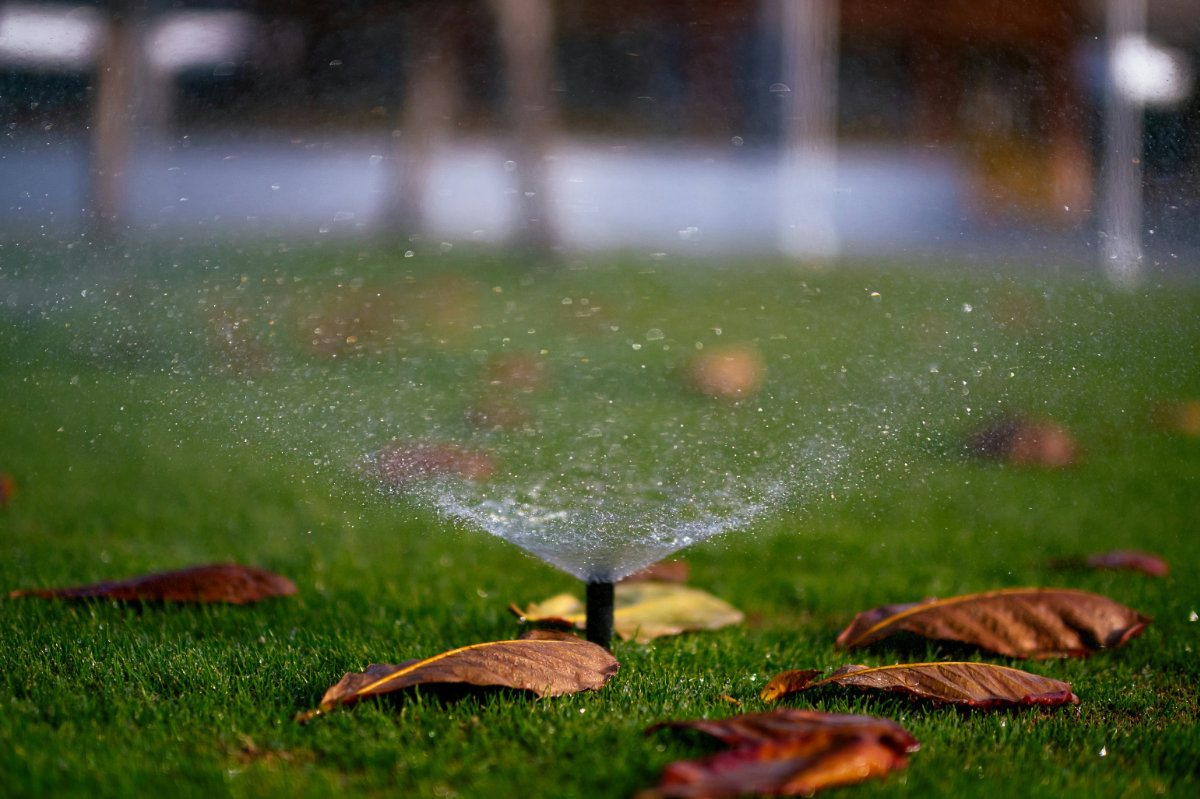
October brings a change in lawn care for Quincy homeowners. You may still be mowing, but cooler nights and the possibility of freezing weather make it time to rethink your sprinkler schedule.
Should you keep watering to help your lawn stay green? Cut back because temperatures are dropping? Or schedule irrigation winterization now?
The answer depends on your grass, soil moisture, recent rainfall, and the forecast. Fall watering can help an actively growing lawn maintain its color during dry weather. At the same time, your irrigation equipment needs preparation before freezing conditions put it at risk.
Here’s how to plan for both.
Why Your Lawn Can Still Benefit From Water in October
Many Illinois lawns contain cool-season grasses such as Kentucky bluegrass, tall fescue, perennial ryegrass, and fine fescue. These grasses typically grow well in spring and fall, while hot summer conditions can slow growth or bring on dormancy.
That makes fall an important period for lawn care. Grass that struggled through summer may begin growing again as conditions improve, but it still needs adequate moisture. Illinois Extension identifies fall as a season when cool-season lawns green up and can benefit from attention after summer stress.
If your lawn is still growing and the soil is becoming dry, supplemental watering may help maintain green color deeper into fall.
However, watering cannot guarantee green grass through winter. Grass type, temperature, sunlight, soil conditions, and overall lawn health also affect its appearance.
Quincy’s First Freeze Often Arrives in October
Winter preparation deserves attention before the calendar reaches November.
The National Weather Service lists October 20 as Quincy’s average first freeze date, based on its 1991–2020 climate statistics. The actual date varies from year to year, and conditions at your property can differ from those at the observing station.
Use that average as a reason to start planning, rather than as a deadline that guarantees your system is safe until October 20.
A first overnight freeze also does not necessarily mean the soil has frozen or the lawn has stopped growing. Your grass may still need moisture while exposed irrigation components already need protection.
For Quincy homeowners, October is a good time to discuss both the remaining watering needs and the appropriate timing for winterization.
Cooler Weather Doesn’t Guarantee Enough Rain
A comfortable afternoon can make it easy to forget about watering. But temperature alone doesn’t tell you whether your lawn has enough moisture.
The National Weather Service notes that the region can experience extended dry periods in early fall. Even when rain arrives, its timing and amount may not match your property’s needs.
Illinois Extension advises that watering during a fall drought can help maintain a green, actively growing lawn. Its fall guidance uses about one inch of water per week as a general reference.
Rainfall counts toward that amount. Use a rain gauge and check soil moisture before supplying additional water.
For example, if you’re working with a one-inch target and your property receives 0.6 inches of rain, approximately 0.4 inches remains to consider supplying through irrigation. That calculation is a starting point, not a requirement to water regardless of conditions.
EPA WaterSense recommends accounting for rainfall and adjusting watering to actual landscape needs.
Adjust Your Summer Sprinkler Schedule
An irrigation schedule chosen for hot weather should be reviewed as fall progresses.
Check the controller rather than assuming its settings still fit the lawn. EPA recommends adjusting timer-based systems for seasonal weather conditions and monitoring for signs of overwatering or underwatering.
For an established lawn, Illinois Extension generally recommends watering thoroughly enough to reach the roots, with time between applications. Early morning is usually preferred, although freezing conditions should take priority when deciding whether it is appropriate to run the system.
During October, pay attention to:
- How much rain your property received.
- Whether the soil remains moist between watering cycles.
- Whether the grass is still actively growing.
- Any pooling or runoff while sprinklers operate.
- Overnight temperatures and approaching cold weather.
You may need fewer watering cycles as conditions change. There is no single October runtime that fits every Quincy lawn.
Recently Seeded Areas Need Separate Attention
If you seeded or overseeded earlier in the fall, those areas may still need a different watering approach from the established lawn around them.
Illinois Extension recommends keeping the seed zone moist during establishment, then gradually moving toward deeper watering with longer intervals as the grass develops. Newly installed sod also needs moisture in the soil beneath it, without saturation.
Tell your irrigation provider where those areas are before arranging winterization. That helps you discuss remaining establishment needs alongside equipment protection.
If you are considering starting a seeding project in October, ask about timing first. Illinois Extension identifies late summer to early fall as the preferred window for establishing cool-season lawns. Later planting gives young grass less time to develop before winter.
Winterization Takes More Than Turning Off the Timer
Switching the controller off prevents scheduled watering, but it does not necessarily remove water trapped in irrigation equipment.
Rain Bird explains that freezing water can damage sprinkler systems. Depending on the system, winter preparation may involve:
- Shutting off the irrigation water supply.
- Removing water using the appropriate drainage or blowout method.
- Setting the controller appropriately for winter.
- Protecting exposed valves, piping, and backflow equipment.
The method depends on the installation and its components. Rain Bird recommends contacting an irrigation specialist for assistance with draining the system.
Ask about winterization while there is time to assess your system and arrange service. Discuss the forecast and equipment exposure rather than waiting for a fixed date.
After winterization, consult your provider before restarting the system. If newly established grass needs additional water, ask how to manage that need without undoing the winter preparation.
A Practical October Plan for Your Quincy Lawn
Use this checklist to guide your next steps:
| What’s happening at your property? | What to do next |
|---|---|
| Grass is growing, soil is drying, and rain has been limited | Assess whether supplemental watering is needed |
| Soil stays wet or water pools during irrigation | Review the schedule, drainage, and application rate |
| One area stays dry while others look healthy | Check sprinkler coverage before increasing the entire zone’s runtime |
| Recently seeded or sodded areas are still establishing | Discuss their watering needs separately |
| Freezing weather is approaching | Confirm winterization timing and equipment protection |
| The system has already been winterized | Consult your provider before restarting it |
These are starting points for assessment. Persistent lawn problems may also involve soil conditions, pests, or disease, so increasing water should not be the automatic response.
Before the season ends, note any broken heads, unusual wet areas, or coverage problems. That information can help guide repairs and next spring’s startup.
Plan Fall Irrigation Service in Quincy, IL
Keeping your lawn green later into fall starts with understanding when it needs water and how effectively your system delivers it. Preparing for winter means planning equipment protection before freezing conditions arrive.
Clay’s Lawn Care provides irrigation repairs, system adjustments, and seasonal maintenance for Quincy homes and commercial properties.
Tell us whether you need help reviewing your fall watering schedule, addressing sprinkler problems, or arranging winterization. Mention any recently seeded areas and concerns you have noticed during the season.
Request your irrigation estimate or call 217-440-5256 to discuss fall irrigation service for your Quincy property.